Tornado
Overview
Tornadoes are violent columns of rotating air that can occur in certain weather conditions, especially during thunderstorms.
Thoughts
I haven’t experienced any other weather event that unnerves me nearly as much as tornadoes do. Occasionally, I’ll mention tornadoes when writing about other seemingly unrelated things, such as some of the areas you encounter in the game Skies of Arcadia. I also have a recurring nightmare that I experience every once in a while, although it has been some time I last remember dreaming it: Nightmare - Recurring - Tornados.
The Science of Tornadoes
Etymology
The word tornado is a resultant combination of several words in multiple languages:
- “tonare” (Latin, “to thunder”)
- “tronar” (Spanish, “to thunder”)
- “tronada” (Spanish, “thunderstorm”)
- “tornare” (Latin, “to turn”)
- “tornar” (Spanish, “to twist, turn”)
Tornadogenesis
Most tornadoes are a product of complex fluid dynamics as different volumes of air interact with each other. Masses of warm and cool air colliding create wind shear, leading to the rotation of air in a horizontal orientation. Due to the updraft of the storm itself, this rotating body of air is tilted upward into a vertical column, leading to the formation of a tornado. Tornadoes created this way are generally referred to as supercell tornadoes, and account for somewhere around 80% of all tornadoes.
In some cases tornadoes skip the first step and begin spinning in a vertical column, but this is much less common and has different conditions that lead to it occurring. Tornadoes of this variety are called — you guessed it — non-supercell tornadoes.
There are other types of tornadoes as well that don’t fit neatly into these categories, such as landspouts and waterspouts. These form over land and water, respectively, but aren’t powered by rotation of a parent storm. Instead, the rotation of the air starts out at ground level.
Of these varieties, supercell tornadoes are usually the strongest by far, followed by non-supercell tornadoes, and finally the landspouts and waterspouts.
For more information, check out this page.
Measuring Tornado Wind Speed
The Enhanced Fujita Scale (EF) is the principle way of classifying tornadoes and is primarily based on observing the damage that they cause. The original Fujita Scale (F) preceded the EF Scale, but is considered obsolete after taking into account better estimates of how wind speeds damage structures.1
For example, when using a large shopping mall as your Damage Indicator (DI), if you “observe complete destruction of all or a large part of the building,” then your Degree of Damage (DOD) is a 9, which suggests a wind speed of approximately 204 mph.
Note that outside the US, other systems are also used to classify tornadoes, such as TORRO’s T-scale.
| EF Rating | Wind Gust Speeds (mph) |
|---|---|
| 0 | 65-85 |
| 1 | 86-110 |
| 2 | 111-135 |
| 3 | 136-165 |
| 4 | 166-200 |
| 5 | 200+ |
| 6 | Hypothesized |
Cyclonic vs. Anticyclonic
In the northern hemisphere, tornados are considered cyclonic if they spin counterclockwise. If they spin in the opposite direction, clockwise, then they are considered anticyclonic.2
Almost all tornadoes are cyclonic — somewhere around 98%!3
Note that if you’re in the southern hemisphere, then the directions are reversed!
Common Descriptions
While there isn’t an official list of descriptions for tornadoes based on their appearance, there are names that are often used:
- Wedge
- Cone
- Rope
- Stovepipe
- Drill Bit
Remarkable Tornadoes
I’ll wait to add much here until Obsidian Bases are supported via Obsidian Publish, but some tornadoes that come to mind immediately are the Jarrell Tornado, Joplin Tornado, and Pilger Tornadoes!
Tornadoes In Media
Twister
Twister is a classic tornado movie! Like I wrote in the note for that movie, I blame it for some of my fears of tornadoes in general, having grown up watching it (not to mention living in the Midwestern US).
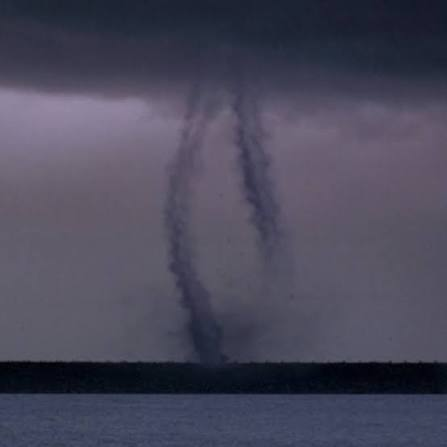
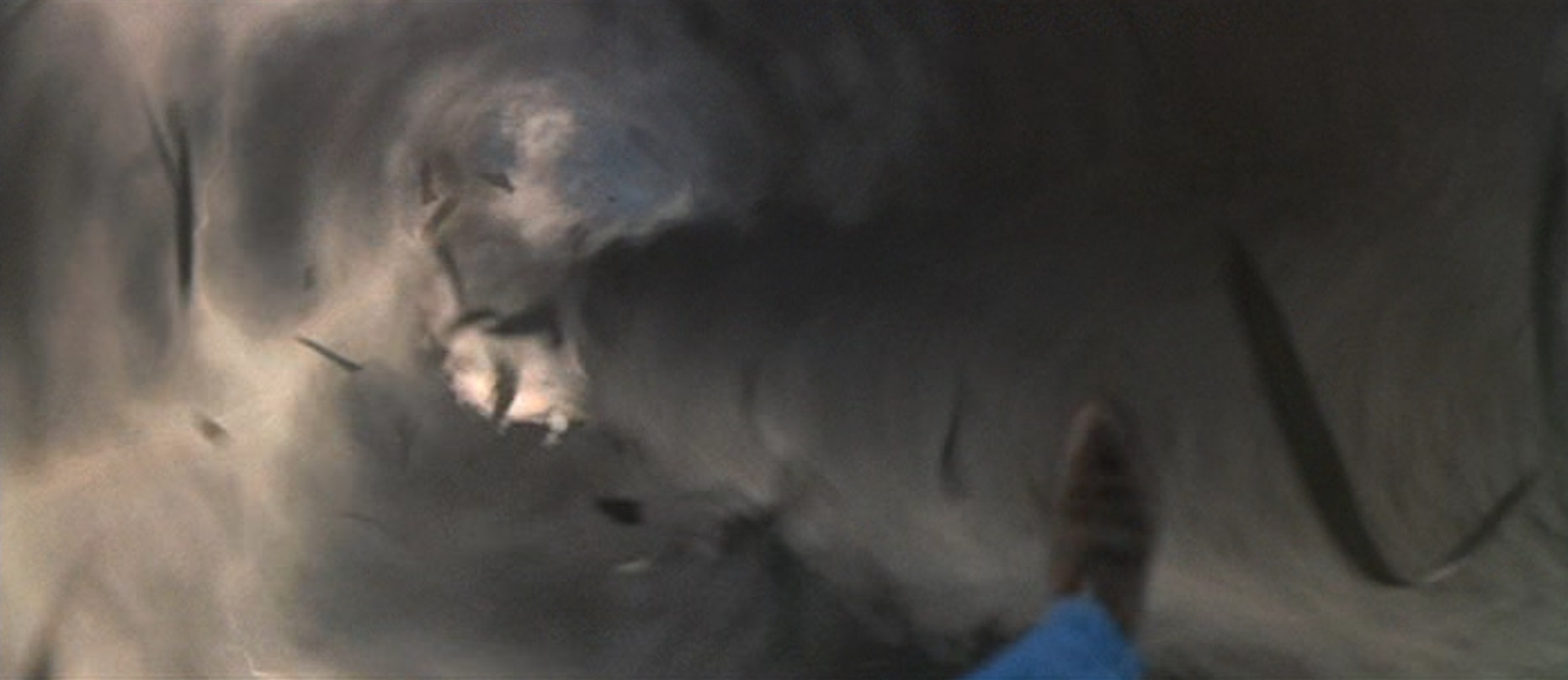
This scene, where the main characters are holding on for dear life while looking up into the interior of the tornado, was always really fascinating to me. It’s a neat effect!
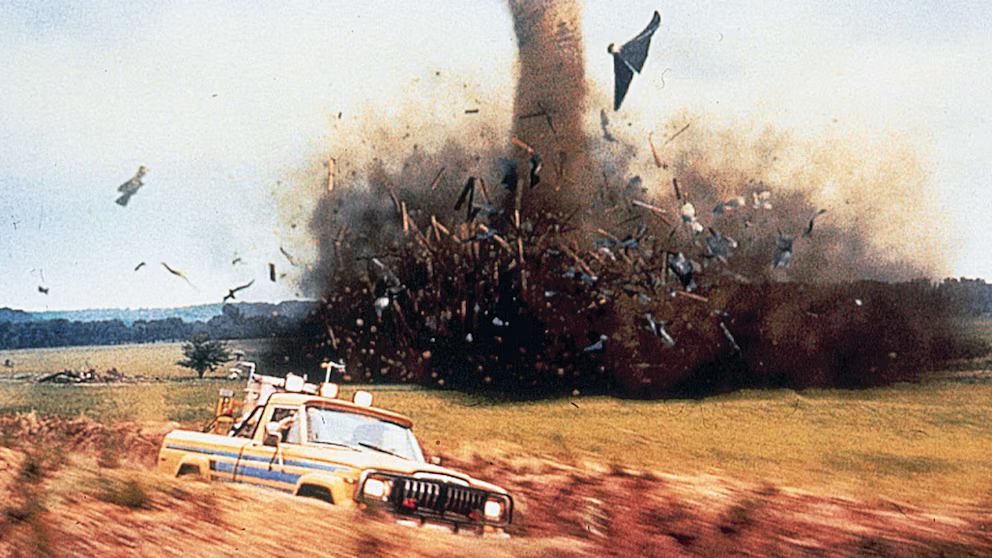
The animalistic sound effects that they gave the tornadoes in some scenes really sells the notion of the tornadoes being primal acts of nature.
weather tornadoes natural_disasters